Showing posts with label Will Eisner. Show all posts

Friday, 27 August 2021

One Lovely Drawing

I hope David Apatoff will excuse me for borrowing the title from one of his recurring series, but I wanted to share this.


This panel comes from The Name of the Game (this is the italian edition, called Le Regole del Gioco) one of Will Eisner's last graphic novels and, in my opinion, one of his most accomplished.

I used to be a Will Eisner enthusiast, as all lovers of comics should be at one point in their life.

I've always been aware of his place in the history of the medium: I was introduced to his works by anthologies or articles stressing the importance of his work, but more than the praise, what captured me was the appeal of his style in The Spirit: the noirish use of shadows, the weird angles, the use of depth and layers in a single panel...

The fact that he wrote, penciled and inked his own work, the fact that he started producing personal graphic novels at a relatively advanced age, his convinction about the artistic mertis of the form, all this made him a hero in my eyes.

Whenever I would have the chance, I'd introduce Eisner's comics to friends and aquitainces

I remember how my friend Taiyo and I both smiled knowingly when the character of Hogarth shows a Spirit comic to his alien friend in Brad Bird's The Iron Giant.

I even had a very brief email exhange with him once (he gave me very simple and sensible advice, which I should have taken).

With time though, my feelings towards both his work and his persona has become a little more complex.

I started noticing some flaws in his drawings, the writing would strike me as pedantic at times, I missed the more experimental stuff he used to do with The Spirit that he abandoned in his later work.

A bit of the childish admiration I had for him was eroded when I realized the Spirit stories, although fully under his control, were the product of a studio effort that counted other writers, pencilers, inkers, colorists and letterers (although I totally get why and besides, that was the common practice for all cartoonists working for daily newspapers).

I won't discuss here other more controversial aspects about Eisner (I will in a future post), but even after all this caveats, I must say that I still go back to his work every so often (and that I second the choice to name an important award after him).

His job was personal and littered with little gems like this one.


It's a simple drawing, a panel of little importance in the narrative (although it encapsulates a few of the themes of the graphic novel), but everying about it is appealing.

The two men nicely fill the panel, leaving the right amount of 'air' to accomodate the speech balloon.

The difference of physical stature is used effectively to stage the moment.

The style of their wardrobe quickly conveys both the characters' status and time-period

I love how stylized the Sydney's face is (he's the tall one on the left) providing a nice contrast with Conrad's exaggerated facial expression on the right.

All this in a minuscule, spontaneous drawing that probably did not take long to draw and that will be quickly glanced over in the time it takes to read the short dialogue.


Monday, 8 April 2019

Will Eisner

Recently visited the Will Eisner exhibit at the BSC in Brussels.

My companion during the visit was the always nice Steven De Rie, who was warned by some fellow cartoonist not to expect much from the exhibition, since most of the samples  came from a single private collection.

I ignore what kind of show this other cartoonist expected, but the exhibit was really well done.
Sure there was a relatively little from The Spirit to see (only a handful of splash-pages) but the selections form the master's later works such as Dropsie Avenue, The Name of the Game or A Contract with God were substantial and diverse (not to mention practically the complete The Dreamer, a book that holds a very special place in my heart).

The pieces were accompanied by large panels of commentaries from the curators and some printed magazines froma all over the world.
If any criticism can be made about the exhibition is the scarcity of prep material such as sketches and/or scripts (it would have been interesting to see how the Spirit stories were plotted, scripted and then realized, especially beacuse the process involved other artists or writers).

Some more photographs may have helped too and it would have been great to have a screen or two playing excerpts from the various Eisner docs that DO exist.

Anyway, this should not be missed by any comic book lover who has the chance to visit Brussels or its surroundings.

The exhibition lasts until March the 2nd 2014. Entrance fee is 8 euros, but it buys the access to the whole museum (which is always worth the price)

PS: very very very nice chit-chat with Steven De Rie after the visit about all things comics. 


Prisoners of Gravity


In my book, one of the absolute highlights in television history has been Prisoners of Gravity.
Originally aired on TVO, the Ontario public service channel, the show delved in sci-fi, speculative fiction and horror genres in literature and comics (film was touched upon, but not extensively), long before "geek culure"* became cool.


The array of talent interviewed for the show is simply staggering: Jack Kirby, Will Eisner, Frank Miller, Alan Moore, Dave Gibbons, Neil Gaiman, Ray Bradbury, Peter Sraub, Harlan Ellison, Clive Barker, Terry Prachett, Doug Adams, Roger Zelazny, Samuel Delaney only to neme a few.

Those who would like te catch up with this well-aged piece of television can sink their teeth on this Youtube channel:

https://www.youtube.com/user/Teddog3000/videos

(a number of episodes used to be available at the TVO online archives, but once the agreements with the people interviewed expired had to be removed).

The host was comedian Rick Green, whe have since become one of my heroes for his work on AD(H)D.

Read here an interesting look back at the program by itys makers, appeared on WIRED.


* using this expression physically pains me.

Tuesday, 25 July 2017

Ira Schnapp


Sounds like Gerhard Shnobble or one of those made-up names from Eisner's The Spirit.

He was the designer of the Superman comic books masthead/nameplate (admit I had to google for the right term: according to which side of the pond you live the masthead/nameplate is the "title logo" that magazines or other periodical publications sport on the front cover).

https://en.wikipedia.org/wiki/Ira_Schnapp

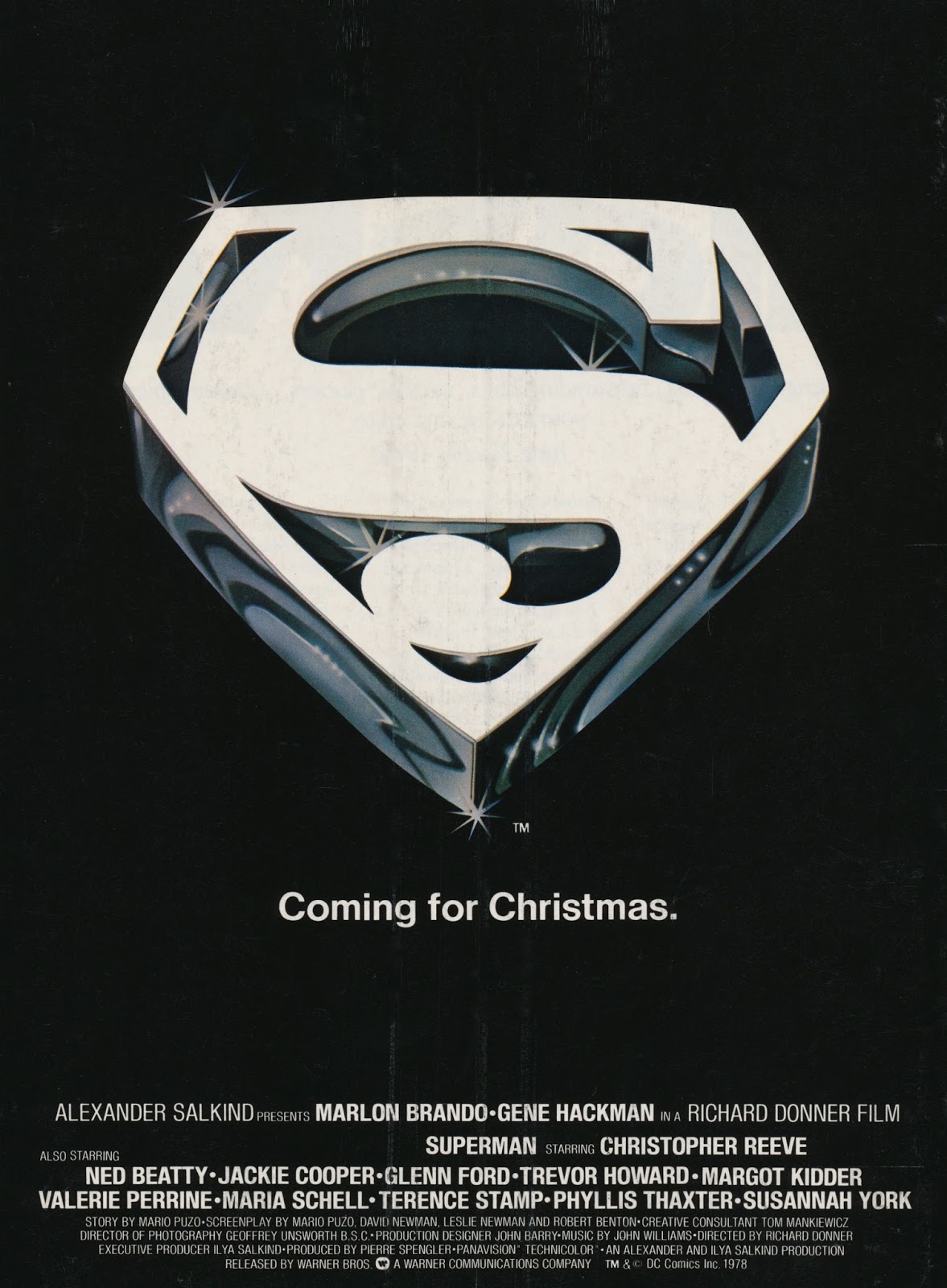
I was actually looking for the person who designed the definitive "S" shield logo.


One of the many thropes of the super hero genre started by Superman, was the idea that a hero's costume would implement some sort of symbol, emblem or crest, often boldly displayed on the chest.

I can only speculate where this idea could have originated.
Frank Miller proposed his theory in a conversation with Will Eisner (conversation transcribed for the posterioty in the must-read book "Miller/Eisner" - a book that still injects me with some residual respect for Mr. Miller, or at least for his past output, but I digress..) that the printing quality was so shitty that characters had to wear their name spelled out in order to be recognized.

The Superman symbol went through a number of permutation in its eighty-years history, and gets regular redesigns to this day with every new reboot, be it on paper or on the silver screen.


However, one version of the symbol got to be the "official" (or rather trademarked) variant and I wanted to know who did the job.

Unfortunately I was not able to find out. But in my internet scouting for an answer I stumbled upon Ira Schnapp.


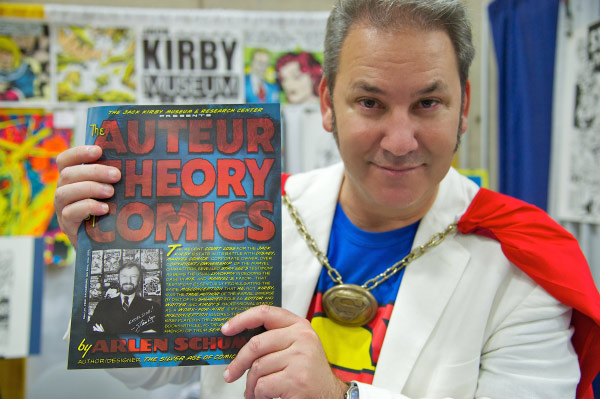
Comic-books historian and man with a taste for flamboyant outfits Arlen Schumer has a full lecture on this lesser known artist, who helped shape so much of the DC graphic identity over the years.


Likewise, calligraph extraordinaire Todd Klein dedicated quite a few posts to him on his blog. It' all worth reading.

Comics are a visual medium. On the top of my head I can only think to advertisement as the only other discipline that worked that extensively on the cusp where words become VISUAL OBJECTS, with meaning emanating not only from the IDEA sealed in the word, but from its visual presentation.

But advertisement is not an art (a pretty big statement I do not want to unpack here, even though I anticipate some antagonism to it), while comics is (note the singular).


Thursday, 20 March 2014

Eisner, Kurtzman, Lee

Some link about the late and forever missed Harvey Kurtzman, one of the single most important driving forces of american comics.

For someone who invented MAD Magazine and has written some of the most biting satires about politics, war, media and Pop culture, I'm surprised by his soft-spoken and even shy demeanour.

Not being an expert on the man himself, I leave it to the linked content to tell the tale about this amazing cartoonist.


http://youtu.be/TL6cGcPFVzc. 


http://youtu.be/z5OFquX5riA


http://youtu.be/ulG-Jm4wKPE


http://youtu.be/VoyMnZBiOHk


http://youtu.be/rsQa_IHChJY


A couple of audio files of interviews with underground cartoonists/publishers/academics Art Spiegelman and Denis Kitchen, reflecting on the work of Kurtzman:

http://www.inkstuds.org/wp-content/podcast/KRAZY/spiegelman_imjin.mp3

http://www.inkstuds.org/wp-content/podcast/090630%20Denis%20Kitchen%20on%20Harvey%20Kurtzman.mp3


Tuesday, 3 December 2013

80's doc


Wednesday, 21 November 2012

Federico

Chiara odia i Social Network. Odia i blog. Odia i fiumi di inchiostro (anche se elettronico) versati per dare voce anche a chi non ha nulla da dire.
Non gli piace sostituire le relazioni personali con le relazioni tramite mezzi computerizzati.
Detesta che si possa pensare di "partecipare" a una protesta semplicemente condividendo uno status su Facebook o una foto su Twitter.

La boutade al posto del contenuto.
Io rispetto molto l'opinione di Chiara. Temo perfino che possa avere ragione.
Solo che Chiara è un personaggio inventato da me.

È basata su una persona che conosco più su altre di cui ho solo letto o con le quali mi sono scritto, ma non "esiste".

Eppure per me è molto reale. Forse per questo è anche il personaggio più facile da scrivere.

Provo a spiegale perché potrebbe avere torto.

Anzitutto se non fosse stato per internet, i blog, i social network, lei non esisterebbe. Tutto il materiale che ho potuto consultare per creare la storia di cui lei fa parte è stato recuperato (od ordinato) via internet. Tutte le persone contattate sono state raggiunte perché rintracciabili sul www.

E va bé, dice Chiara, ma io non ce l'ho mica con la tecnologia. Ce l'ho con chi pensa che questa renda "amiche" persone che nemmeno si conoscono col nome proprio. Con chi pensa che un blogger sia un giornalista.

Permettimi di risponderti.

Se non avessi condiviso la mia passione per Zaffino sul mio blog, non avrei conosciuto una serie di persone poi via Facebook.

Tra queste persone c'è Federico. Non è (ancora) un mio grande amico. A parte commentare a vicenda i nostri post, non facciamo molto altro. Lo so che questo è proprio il tipo di relazione povera che critichi, ma aspetta, prima di giudicare.

Se non ci fosse stato Facebook, non avrei avuto con lui nemmeno questo superficiale rapporto.

Federico ha gusti eccellenti: gli piacciono tutti i nomi giusti: Alex Toth, Will Eisner, Jordi Bernet, Jorge Zaffino, Corrado Mastrantuono, Milton Caniff.
E ha solo 15 anni (penso di avere a che fare con un possibile ragazzo prodigio).

Così l'ho tirato in mezzo nel nostro progetto. Sì Chiara, nel NOSTRO, perché dentro ci sei anche tu.

Per ora il ragazzo è molto umile. Dice (e io gli credo) che si esercita molto. A giudicare dalle sue prove (poco importa se si tratta di copie) direi che è sulla strada giusta, no?


Wednesday, 20 June 2012

No Excuses

Mi pareva che ci fosse una canzone che si chiamava così.
E in effetti c'è;, ma è degli Alice in Chains e dubito di conoscerla. Probabilmente la canzone che ho in mente io è un'altra che contiene la stessa espressione.

Il titolo del post siannovera nella categoria "buoni propositi/auto-redarguizioni".

Le scuse che non mi è permesso di usare sono la mancanza di tempo e di sapzio.

Bisogna scrivere e disegnare ogni giorno. Perché lo dice(va) Ray Bradbury:

"You have to write!" he would tell people. "You have to write every day! I still write every day!"

La citazione viene da un articolo di Nail Gaiman, che in numerosissime altre occasioni ha ribadito lo stesso concetto a tutti gli aspiranti scrittori.

Io non voglio essere uno scrittore, ma un fumettista, il che non mi esime dalla pratica quotidiana dello scrivere. Al contrario: mi impegna doppiamente a scrivere e a disegnare ogni giorno.

Nel libro/conversazione tra Eisner e Miller (autore quest'ultimo con sui ho dei probelmi ma che non si puó non amare proprio per questa bellissima pubblicazione), il vecchio Frank cita l'importanza dell'acquisizione di una disciplina: disegnare un certo numero di ore, sempre uguale, tutti i giorni.

Ancora questa mattina riflettevo sul perché ho sempre desiderato dare l'illustratore/fumettista. Non perché è un lavoro "figo" o "facile" (Dio sa se è difficile), ma perché se voglio anche poter vivere, avere relazioni umane significative, poter andare dal barbiere, fare la spesa, giocare coi miei figli, andare al barbecue dei vicini  e ogni tanto persino svagarmi, ecco allora devo poter disegnare durante le ore di lavoro.

Non solo: gli unici problemi  che mi sento a mio agio nel risolvere sono quelli del disegno
Qualunque altro lavoro presuppone un insieme di competenze che posso solo fingere di avere.
Davvero. La responsabilità di fare bene il mio lavoro è resa più pesante dalla paura che qualcuno prima o poi scopra che sto fingendo, che non sono un vero tecnico di computer, così come non ero un "vero cameriere", o un "vero camionista". Ci sono capitato in questi ruoli e ho cercato di recitare la parte al meglio.

Fino a quando non sarò un disegnatore professionista, dovró fare tempo per la pratica quotidiana e questo comporterà dei sacrifici.

Questi post sono un aiuto in tal senso. Mi sono accorto che scrivo male e ho il sospetto di parlare male e di conseguenza di pensare male.
Utilizzo troppo facilmente locuzioni o espressioni d'uso comune. Esagero nel tentare di creare un tono colloquiale nella mia prosa infarcendo i periodi di "dunque", "quindi", "poi" seguiti da virgole o punti di sospensione (bleah)

Che il blog diventi una palestra affinché io possa raggiungere uno stile chiaro e scorrevole e una mente agile e acuta.