Quentin Tarantino's remarkable Once Upon a Time in Hollywood contains several nods to pieces of popular culture I hold dear: the lost art of movie posters, italian genre movies from the 70s, old western tv shows scored by people Jerry Goldsmith or Bernard Herrmann and, once again, comic books. This time QT payed hommage to MAD Magazine, a seminal american publication influential to at least two generations of comedy writers, performers and of course cartoonists. Watch Tarantino talking about it with late night show host Jimmy Kimmel (that part starts at the 6:35 mark):
For the movie, MAD veteran artist Tom Richmond created some wonderful illustrations. This inspired me to create my little MAD Magazine homage, which is, at the same time, an hommage to Red Letter Media, a video/filmmaking company based in Milwakee, rised to Internet stardom in the last decade thanks to their witty, funny, insightful and irreverent video essays and review shows on YouTube. I spend more time on YouTube than I care to admit, especially to have something to listen to whenever I do something which does not require much from the left side of my brain and for the last 10 years #RedLetterMedia put out consistently good content. But more than that, their channel is essentially the YouTube version of a hang-out movie, as we feel like we got to know these people through their sarcastic yet laid-back attitude, their candor and the omnipresent corpsing and laughter. Little did I know, while creating the piece, that DC Comics announced that it would cease the distribution of MAD Magazine in newsstands and grocery stores, marking the end of an era.
On November 12, 2018, Stan Lee, born Stanley Martin Lieber, passed away. He almost made it to the 100 years mark.
I had the chance to meet Stan Lee in Lucca, twenty-five years ago, long before the main italian comic con became the "sponsored chinesesideshow" of today (copyright: Maurizio Caschetto). He was promoting the Marvel 2099 line of comics and he talked to a relatively small but enthusiastic audience about how Marvel Comics were more scientifically sound than DC's. He used to love Superman, for instance, because in the beginning he could leap across great distances thanks to his superior strength, and that was somewhat acceptable. But then he just flew, with no reason whatsoever. Whereas Thor does not fly. Thor rotates his hammer until it has enough momentum, then throws it and just exploits the pull of the hammer to fly ("Now, THAT's scientific!" he would joke). Or he would tell about how puzzled he was when his assistant informed him that some "Mr. Felony" was there to meet him and about his surprise when he discovered it was none other than italian film director Federico Fellini. I was but an 8th grader and listened in awe. When asking (and getting) his autograph, my dear friend Alessandro Minoggi and I showed him the opening splash-page of a Spidey story we made, in our first attempt to create proper comics (on decent artist's board and using rapidographs). He smiled and nodded approvingly, which made us feel like a million dollar. To the 13-years-old me, the avuncular Stan Lee seemed rather grandfatherly and I would not have thought back then that a quarter century later he would still be such a felt a presence in comicdom. He leaves behind a great legacy, albeit a problematic one. His passing, curiously not much later than Spider-Man co-creator Steve Ditko's, signifies the definitive end of an era, although it probably won't shift much the conversation among fans and historians about who should get what credit for the creation of the characters and stories that, still to this day, constitute the foundations of the so-called Marvel Universe.
What follows is an edited collection of thoughts and comments originally posted on the facebook group Comic Book Historians. The comments were many (the most comments any of my posts ever generated facebook) but the exchange, however stimulating, suffered of some of the same flaws that affect on-line chicken-coops. In order to make it more like some sort of platonic dialogue, I removed the name of the commentators and polished it a bit.
To me the point is not so much that Alan Moore is against any adaptation of his work: he is only half of the creative equation, after all, and Gibbons may feel differently.
(well actually that is part of the point, but it alone is not enough)
Nor it is the fact that Watchmen is a work crafted for a specific medium (it is a story above all, and its narrative can lend itself to brilliant adaptations in other media)
It is not even the fact that Damon Lindelof of all people is producing the show (I've written it before, I even liked ost quite a bit and I think Lindelof is a commendable writer).
What rubs me the wrong way is that the troubled history of how DC/Warner treated Moore (and Gibbons) form the very start is well known, as much as the way DC/Warner shamelessly exploited it.
No matter how sincere Lindelof's love for the book is, and how compelled he feels to give a shot to this adaptation, I think any artist with an ounce of integrity should stay away from Watchmen (or anything Moore for that matter) as much as possible.
Being a FAN is not enough a motivation to disrespect the author and the CONTEXT.
Or, as Alan Moore himself puts it: "anybody who has anything to do with any of these shitty Watchmen travesties, even as a member of the audience, will be dragged screaming to hell by their nipples."
--
I do not even how to take Lindelof's use of his dying father in his story. On one hand it may be something very personal and open-hearted, on the other hand can be seen as a manipulative storytelling trick...
---
Does Moore have the right to think he's getting wronged by DC, by keeping his work in print?
Can he rightfully describe the writers involved in project such as Before Watchmen or Doomsday clock as "creatively bankrupt" for working with pre-existing characters when doing that has been the signature of his entire career, including, especially, "Watchmen", "League of Extraordinary Gentlemen" and "Lost Girls"?
And if he wished to prevent people from creating unnecessary prequels, sequels, etc., to his work that he why refuse to negotiate with DC? After all Neil Gaiman has been able to keep some authority over Sandman, although the series is owned by DC who could use it as they wish.
The new Head of DC had announced that she really wanted to pursue some of DC’s key properties, by which I assume she probably meant WATCHMEN. I think she may have even mentioned it, I don’t know. So I said to Dave [Gibbons] that yes, I had heard about this and he was saying that he knew the thing that I always wanted was the rights to WATCHMEN back. This was said with the kind of understanding that if they gave me back the rights to WATCHMEN, then I would in return sign over the rights to secondary properties such as, oh I don’t know, Rorschach comic books, sequels, prequels, all of these things…
TV series, things like that?
Yeah, all of these things, potentially, when you think about the different mediums these could be exploited in. Potentially endless properties that could be spun off of WATCHMEN. Now, I stepped in and said to Dave that actually, no I had grown so sick of WATCHMEN over these last 18 months that I didn’t want the rights back anymore. If they had offered them back to me back when I wanted them, ten, twenty years ago, then maybe this could have all been resolved in a friendly fashion. But no, I wasn’t going to take the rights back at this stage after they had pretty much, in my opinion, raped what I had thought to be a pretty decent work of art. I didn’t want them throwing me back the spent and exhausted carcass of my work and certainly not under terms that would apparently allow them to go on producing witless sequels and prequels adinfinitum
---
It is very possible Dave Gibbons couldn't quite understand Moore's radical, even paranoid stance.
Was DC being deliberately vengeful against Moore for not playing ball? Were they really that annoyed of the bad publicity (the acclaimed author of the material spitting venom all over it)?
Moore seems to have subscribed to an "either with me or against me" policy ever since.
---
If HBO's series won't be an adaptation, nor a sequel, nor a reboot, why aren't they just creating a new cast of characters to tell their story? Only for the opportunity to market it as "Watchmen" and benefit from the number of viewers who will be attracted by that?
Even the letter is pre-publicity, written in a pseudo Watchmen style. Oh how clever. I am and always will be on the side of the whining, manipulative dumbass.
---
More living off if the coat tails of Alan Moore!
Since DC hasn't put out anything nearly as important or as creative since watchmen it makes since.
---
One of the authors of the book has been very vocal about how his work has lost a lot of its ARTISTIC value because of how DC exploited the property.
In spite of the efforts of the people behind the different Watchmen spin-offs of recent years to deliver quality products, to me "Before Watchmen", "Doomsday Clock", this new show and all the rest, are blatant attempts to milk every last drop of cash from one single stand-alone work that gave DC a lot of prestige back in the day.
DC of course has all the legal rights to do it, but it betrays the original spirit of the agreement (a spirit that Paul Levitz at least tried to honour).
Today, I cannot defend getting involved in a Watchmen spin-off ignoring the whole discussion, although it could well be that Lindelof is oblivious to it (still, ignorantia non excusat).
---
I do sympathize with Alan Moore, but he just has to accept reality. DC owns them, they continue to have value, so DC will continue to exploit them. I think DC already did well by Moore in that Moore got to keep his Watchmen concept pristine--unmolested, unexploited--in the market place for about a generation. That's more than Marvel or DC ever did for anyone else or any other project of this magnitude.
---
Moore has "accepted reality". He's accepted that his former employers acted in a way unacceptable to him, which is why he has no further interest in talking to them. That's it. You are speaking as though Moore is continuing to push this. He isn't. Other people are. The only reason he keeps giving the same answers to questions about DC that he's been giving for 25 years is because people keep asking him those same questions. Ask him about something else, and he won't mention DC or Watchmen at all.
So, I've been trying to figure out how to say something about this for a few weeks, and I'm not sure I know how to express this thought with the clarity I'd like it to have, but I feel like it's worth saying, because it seems to have been forgotten:
WATCHMEN was once held up by DC COMICS as a victory for creators rights.
I was actually there, as a kid, at the SDCC when Alan Moore and DC discussed this, and it was very much a thumb in the eye to Marvel at the time, who were involved in a very public fight with Jack Kirby and his wife Roz, over the return of Kirby's artwork (most of which was stolen from Marvel's storage facilities and sold to collectors).
This was the summer of the creators right era (look up the Creator's Bill of Rights), and even though Marvel had done their Epic line that actually had full creator-ownership, they were still perceived as the bad guys because Kirby had been screwed and he was standing right there telling an industry he helped build that he was pissed.
At the time, there were alternatives to DC and Marvel, but it was considered a huge deal at the time that DC was doing "creator-owned" books like Ronin from Frank Miller, and then Watchmen, from the biggest name in comics. Alan Moore was not just the most popular writer of the era, he was also the most outspoken on creators rights. If you only know the grumpy cantankerous Alan Moore who's been pissed at mainstream comics for about twenty years, then you missed the man who inspired many other writers and artists to stop putting up with bad treatment from their publishers.
We all know the story of what happened with Watchmen (most likely). It helped spark the graphic novel as a format and became a perennial seller, and so the rights to the work never reverted to its authors. And in fact, the contract is so bad that DC's public statements of creator-ownership have turned out to be completely untrue. DC has the rights to Watchmen, and they can and will do with them whatever they want to.
Now, I'm a freelance writer with many books in print, so I know that Alan Moore and Dave Gibbons make a good living from Watchmen, but I also know it's nowhere near what they could have made if they'd owned it outright, or if DC had decided to renegotiate their deal when they realized the book would never go out of print. We can debate the merits of legal rights versus moral rights all day (we won't because it's a waste of time) but Paul Levitz at least respected the spirit of DC's deal with Alan Moore and Dave Gibbons, even if he couldn't give them back ownership of Watchmen (can you imagine how quickly he'd have lost his job if he'd given back the rights to their best-selling book?) he at least let it stand on its own.
There are various stories about why Alan Moore left DC but what it basically comes down to is they did what all comics publishers used to do, they promised something that turned out not to be true.
I've signed deals I regret. I don't know anyone in comics that hasn't. It's almost a fact of life as a freelancer. Sometimes you need the work badly enough not to care or you don't have a lawyer and you don't notice the loopholes. It's less common now, because most creators have good lawyers, but back in the days of Watchmen, few creators had their own representation, and lots of bad deals were signed.
When Before Watchmen happened after Paul Levitz left DC, I was angry at DC for disregarding their promises to the creators, but I also knew that the life of a freelancer is spent waiting for that big book, for those moments that the money truck might somehow get backed up. Few are lucky enough to get those moments in comics. It's never happened for me, and I co-created The Winter Soldier. So I couldn't hold it against any of the people working on the various mini-series, some of whom are friends of mine, because I know how hard it is to make a living in comics as a freelancer.
But at the same time, I was dismayed, because there was Alan Moore screaming "Don't do this!" and a lot of people basically said "screw you, you made a bad deal, live with it" or "this is comics" or wrote think pieces defending a giant corporation's legal rights, which no one was actually questioning.
So look, I made a living writing Captain America for a long time, and I know the history of comics. I know that Martin Goodman promised Jack Kirby things he never honored. I know every story about creators getting screwed over or lied to or betrayed by other creators (like Bob Kane who helped DC fuck Siegel and Shuster a second time in the 40s), but the thing that keeps sticking for me is, I can't ever remember a time when Superman or the Avengers was held up as a victory for creators rights. But Watchmen was.
So, now Dr Manhattan is in DC's new reboot, even though Alan and Dave were not even asked about it this time, and almost no one has said anything this time. The floodgates were already opened five years ago, and this is how it is, so we all just shrug. But I feel like it's important to point it out. I think this sucks, and I think it's very sad that Watchmen again has to serve as a reminder for how poorly creators can be treated.
I'll try here to describe in quick fashion Alan Moore's soured relationship with what can be described as the "mainstream entertainment conglomerates". It is a long and winding road, I had to cut it down or I'd still be writing. And so that you know where I'm coming from: I"m on Moore's side all the way in this.
--
It's 1988. after a successful run on The Saga of the Swamp Thing, various Superman and Batman stories, the seminal Watchmen and the conclusion of V for Vendetta Moore terminate his collaboration with DC comics. He was never an employee, always worked for hire, but his stature was such that he was granted a special treatment and, not least, he was given royalties. Such conditions were extended to other artists at the time and a tidal turn in the way artists were treated seemed to be at hand. Nonetheless, Moore is not satisfied, disagreements arise and Moore leaves. Moore accuses DC of unfair tactics. The publisher is keeping Watchmen and V for Vendetta unusually long in print, meaning the rights are not being returned to the creators. To be fair, Watchmen is a far greater hit than anyone expected, and expectations were high. Keeping the book in print is not that surprising, but Moore sees it as a way to swindle the creators and not renegotiate further publishing.
Moore sticks to his promise to never work for DC again until 1998. Moore is developing the America's Best Comicsline for Jim Lee's Wildstorm, but right before the line should make its debut, Wildstorm is bought wholesale by DC.
The legal implications are such that the new line of books will be OWNED by the publisher, and the creators will only receive royalties. Moore weighs the idea to scrap the whole project but since everything (and everyone) is ready for take off, he decides not to nullify his contract, as it would leave the other artists involved abruptly unemployed.
He's assured he will be given complete creative freedom but alas, DC eventually start to objects to some, albiet minor, things.
Further signs of trouble occur when the movie adaptation of From Hell, directed by the Huges brothers, is released among mild reviews. While borrowing some visuals and the overall conspiracy plot from the book (but not without changes and significant simplifications) and in spite of the excellent casting of the incommensurable Ian Holm as doctor William Gull, that picture fails to summon either the tone or depth of the book.
Moore does not mind all that much; surely he isn't the first victim of poor Hollywood adaptations and won't be the last.
But things change after the release of 20th Century Fox's LXG, and adventure movie featuring a team-up of Victorian literary characters. http://news.bbc.co.uk/2/hi/entertainment/3141720.stm Screenwriters/producers Martin Poll and Larry Cohen claim the paternity of the idea: back in the nineties the duo shopped a script around in Hollywood called Cast of Characters, which had a similar premise, and one of the studios they pitched the idea to was Fox. The problem? That LXG is actually based on the ABC comic book series The League of Extraordinary Gentlemen, penned by Moore and illustrated by Kevin O'Neill.
(to my recollection the book was optioned by Fox even before the first issue was published by DC) The case Poll and Cohen try to make is that Fox, interested in developing the idea, secretly commissioned the comic book series to Alan Moore, so that they could then turn it in to a movie asserting it was a different property than Cast of Characters.
I'm not an expert on Hollywood politics, I do not know whether such a scenario ever occurred in history, setting therefore a precedent for Poll and Cohen's claim, but it strikes me as a silly and unnecessarily convoluted plot.
Why would Fox steal the idea from somebody, only to give it to someone else they would then have to pay royalties to? Not to mention the need to commission a new adapted screenplay?
I suppose the real contentious is the intellectual property. The scheme, if true, would allow Fox to essentially own the idea of a Victorian heroes team-up without paying royalties in perpetuity to the people who came up with the idea. But Fox does not own the IP. They only purchased the movie rights to the book, while all other rights remained with the creators (the only title in the ABC comic book line to enjoy this statute).
And besides, all the characters used were public domain. Moore's version (essentially "I came up with the idea myself"), is also more believable: after all the series shares its core conceit of teaming up Victorian literary characters with an earlier Moore creation, Lost Girs. On top of that, the League also fits with the overall idea behind the entire ABC line it is part of, which was: to create a new line of super hero books based on concepts that pre-date Superman.
The lawsuit drags for a while, Alan Moore is asked to testify, which he does in a 10-hours hearing session. "If I had raped and murdered a schoolbus full of retarded children after selling them heroin, I doubt that I would have been cross-examined for 10 hours" he will later joke.
The whole experience leaves Moore, if not disgusted, at the very least tired of Hollywood, so he decides to go for a grand gesture. From this moment on he will refuse to get any money or credit from adaptations: "Take my name off it, and give all money to artists". This happens right when the V for Vendetta movie is announced. Moore sticks with his decision, but since his detachment from the adaptation is not good for PR for the upcoming movie, the filmmakers release a false statement in which Moore is said to be excited about the project.
Moore gets mad, DC does not quite amend, so he decides to terminate (once again) any relationship with DC. He ends the ABC line and take The League to another publisher.
Anno 2007. The long-announced Watchmen movie start actual pre-production after years of development hell. Interesting to notice: Moore had played nice with regards of this adaptation up until that point. He praised a first draft penned by Sam Hamm in the eighties and even released a few "nonbelligerent" statements in 2000.
Moore would be fine with his "no credit, no money" policy, but a series of moves by DC are the last straw. Moore goes from politely disagreeable to "spitting venom all over it". He further cuts any relationship with Watchmen co-creator Dave Gibbons and DC editor Karen Berger.
Damon
Lindelof never hid his appreciation of Moore & Gibbons’ seminal comic book
mini-series, which clearly influenced LOST (the non-linear structure, the mythology showcased through faux-documents, the multi-character
perspective, often showing the same events from different points of view, the vonnegutian
time-traveling consciousness and so on).
Besides, I didn’t dislike LOST at all, even the much-hissed last
season.
I always
thought the show was an experiment in story telling excess: how many twists can
a plot sustain? How many double-triple-quadruple crosses are possible (both
within the story and within the STRUCTURE of the story).
If the whole
point was to create an almost endless series of mysteries, wrapped in riddles, inside an enigma (this is a quote), then the show delivered.
And isn’t a
mini –series on HBO the natural fit for a story like WATCHMEN? Dark, edgy,
detailed, ornate? Didn’t HBO produce THE WIRE, which Alan Moore publicly
praised?
And while
people can have problem with Zack Snyder’s turgid adaptation from 2009, doesn’t
the fidelity to the details of that version bid well for any other future
adaptation? Any other creative team will be forced to either approximate that
level of accuracy at some level or at least replace it with something equally
worthy.
Well: no,
no and no.
As a general rule, any news about an adaptation of Alan Moore’s work cannot be good news.
1) I'm kind of wary of adaptations in general and particularly of works with a very high reputation or that are regarded as pinnacles in a particular art form.
It is possible that not all arts are created equal.
Some art forms do not have to put up with adaptations. Nobody will ever make a movie out of Beethoven's 5th symphony (now that I think of it, maybe someday someone will).
Other art forms, like the stage play, or the radio play, can probably translate very well in to other forms.
I suppose that fiction has an inherent "cross-adaptability" and the same material can be presented on stage, on the written (or drawn) page or on the silver screen.
But would anybody think of making a literary adaptation of Hitchcock's Vertigo or Welles' Citizen Kane that would rival in WORTHINESS with the original?
Landmark works in art are usually not such because of the material or the plot, but rather because of the execution, and brilliant executions usually take advantage of the specifics of the art form in question.
Which brings me to point >
2) WATCHMEN is such a work. It does things that are only possible in the art form of comics, making thus any attempt to adapt the work possibly pointless.
Unless the original work is used as a starting point to build something different. If this is the case, then I have a lot less of an issue. This has happened repeatedly in history. Often such adaptation change a LOT from the material, even the title and that is a sign that the adaptation is something DIFFERENT.
Of course this makes only sense in a world where the WATCHMEN adaptation is happening for art's sake. If the writers and producers were simply attempting to create a great work of art out of another work of art.
But we all know that this is not the case.
I will allow some bona fide intentions to Lindelof and the producers, but I think we all know what is the reasoning behind this upcoming series: we have a valuable IP and we want to turn it in to a hype, in the wake of productions like Marvel/Netfilx series or Games of Thrones.
--
Why shouldn't they, though? This won't replace or obliterate the original comic book, on the contrary, it will probably rekindle the interest in it. And there is a demand for it, from fans!
That's another problem. I cannot stand this hunger for FILMED adaptation of comics or books we love. As if it is necessary to us. I do not need a movie to portray what's been in my imagination. If anything, the ones who should be attracted to adaptations are people who are NOT familiar with the material.
--
But anyway, the biggest argument against any adaptation of Moore's work has to do with the history of Alan Moore's relationship with DC/Time Warner.
Up until 2003 Alan Moore had no major issues with having his work adapted. Partially because he understood that it was the nature of the game in the writing business (any sensible writer will tell you that film options and film rights are one of the most substantial sources of revenue for a writer), partially because back in the day, comic book adaptations were not that big of a deal as they have become since. He thought there was little harm in getting paid for options and having a studio developing an adaptation, because most of the time the project would get stuck in development.
In those years Moore used to play along; back in 1990 he even gave Sam Hamm's draft for a WATCHMEN some credit, even though it changed a lot of stuff from the comic. I suppose he was just being nice.
Even after Moore's relation with DC had soured (not lastly because of DC's little trick played in order to keep the publishing rights on WATCHMEN) the author had no fundamental issues with adaptations, as long as he could distance himself and was not demanded to participate in the promotion.
One of the first adaptations to be actually produced was a Justice League episode based on "For the Man Who Has Everything", a Superman annual story written by Moore and illustrated by Dave Gibbons, which has always been regarded as one of the character's best.
Moore has reportedly been generous towards this adaptation. and furthermore it was a story involving a character he himself did not invent.
Things started to get bad after the From Hell and the League of Extraordinary Gentlemen movies. They were both critical and box office disappointments, and deservedly so.
Moore probably started getting wary of his name being associated with bad movies rather that with the FAR FAR superior original material.
But still, he seemed cool enough, and quoted Raymond Chandler when people questioned him about his work getting ruined, showing them shelves full of his books and saying: "See? The movies did not ruin my work. It is still here."
Sounds like Gerhard Shnobble or one of those made-up names from Eisner's The Spirit.
He was the designer of the Superman comic books masthead/nameplate (admit I had to google for the right term: according to which side of the pond you live the masthead/nameplate is the "title logo" that magazines or other periodical publications sport on the front cover).
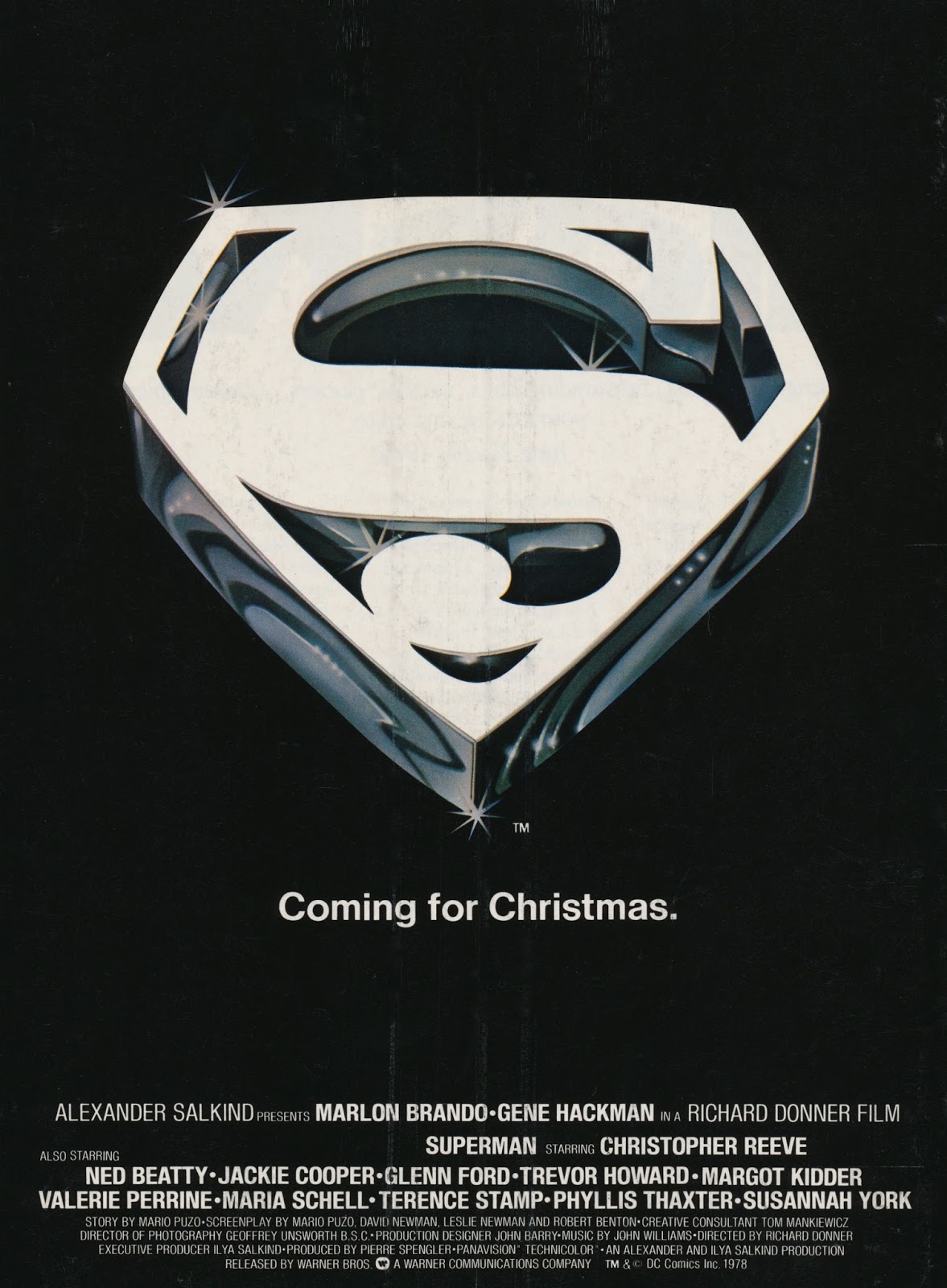
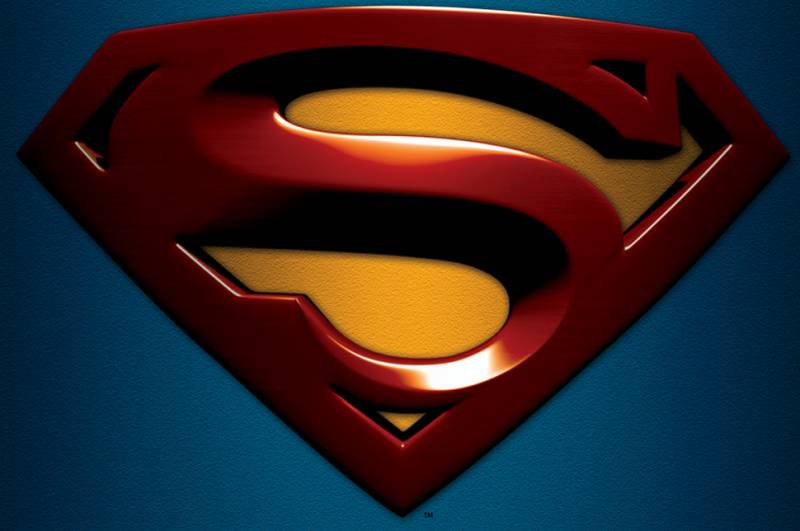
I was actually looking for the person who designed the definitive "S" shield logo.
One of the many thropes of the super hero genre started by Superman, was the idea that a hero's costume would implement some sort of symbol, emblem or crest, often boldly displayed on the chest.
I can only speculate where this idea could have originated.
Frank Miller proposed his theory in a conversation with Will Eisner (conversation transcribed for the posterioty in the must-read book "Miller/Eisner" - a book that still injects me with some residual respect for Mr. Miller, or at least for his past output, but I digress..) that the printing quality was so shitty that characters had to wear their name spelled out in order to be recognized.
The Superman symbol went through a number of permutation in its eighty-years history, and gets regular redesigns to this day with every new reboot, be it on paper or on the silver screen.
However, one version of the symbol got to be the "official" (or rather trademarked) variant and I wanted to know who did the job.
Unfortunately I was not able to find out. But in my internet scouting for an answer I stumbled upon Ira Schnapp.
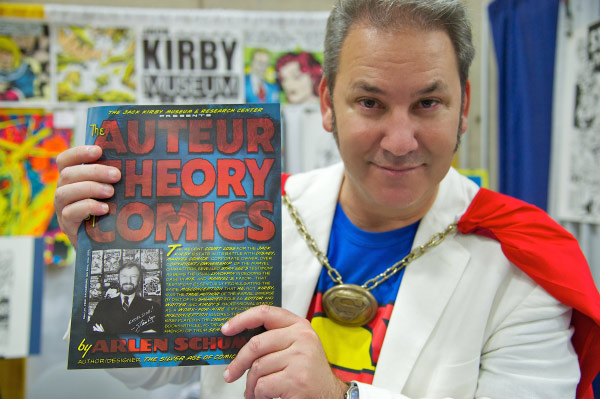
Comic-books historian and man with a taste for flamboyant outfits Arlen Schumer has a full lecture on this lesser known artist, who helped shape so much of the DC graphic identity over the years.
Comics are a visual medium. On the top of my head I can only think to advertisement as the only other discipline that worked that extensively on the cusp where words become VISUAL OBJECTS, with meaning emanating not only from the IDEA sealed in the word, but from its visual presentation.
But advertisement is not an art (a pretty big statement I do not want to unpack here, even though I anticipate some antagonism to it), while comics is (note the singular).
Friday, 26 September 2008
Secondo capitolo della mia personale guida al meglio del web-per-chi-ha-tempo-da-perdere. Come accennavo in un post precedente, ciò che genera nausa nel Web è il rincorrersi di commenti, risposte e riciclaggi che proliferano con velocità virale. Hai un'idea divertente? Il giornodopo è già presa, smontata, copiata, commentata, masticata e sputata. Ci sarebbe da arrendersi. Per questo sono rimasto sorpreso della piccola quantità di inchiostro versata riguardo Michael Argusso, noto con il modesto nome di “ItsJustSomeRandomGuy” o ancora più semplicemente “Random Guy” (letteralmente: “Tizio qualunque” o meglio “un tizio a caso”) e dalla esigua serie di imitazioni-omaggi-riletture che il suo materiale ha avuto.
Si badi, non è passato inosservato: i suoi video sono stati cliccati MILIONI di volte, il suo canale vanta una alta posizione per numero di abbonati su Youtube dove, visto il numero di utenze, qualsiasi posizione a due cifre può considerarsi un successo.
Forse complice una sua certa ritrosia dell'autore a parlare di sè se non attraverso i suoi filmati, di lui non si trovano che poche notizie sparse. Allora ne parlo io, convinto che il buon lavoro vada premiato.
Argusso ha cominciato da una parodia (sì, anche lui). Prendendo spunto dalla celebre e riuscita campagna pubblicitaria Get A Mac della Apple, già soggetto di numerose riletture, il ventisettenne americano ha cominciato a inscenare piccoli sketch che vedono protagonisti diversi supereroi delle due maggiori concorrenti americane Marvel e DC.
L'approccio è lo-tech: Argusso non fa altro che tenere in mano di fronte alla camera del proprio computer alcuni pupazzetti dei suddetti eroi. Non c'è l'ombra di animazione passo uno. Siamo quasi dalle parti del fotoromanzo, per dare una vaga ilusione di movimento Argusso cambia la posizione dei personaggi da un'inquadratura all'altra. Quello che manca in effetti speciali è però compensato dall'ottima capacità di Argusso nel creare le caratterizzazioni vocali dei personaggi (spesso basate sulle voci degli attori che hanno interpretato i vari ruoli negli ultimi anni) e dal suo frizzante senso of humor. Quanto sia difficile scrivere buoni dialoghi comici a “botta e risposta” che siano spigliati oltre che effettivamente divertenti per contenuto e “delivery” fatevelo dire da chiunque lo fa di mestiere.
Nei primi video della serie Superman si vede costretto ad ammettere, di fronte ad un imbarazzato Spider-man, la supremazia strategica nel marketing da parte della rivale Marvel, soprattutto nella gestione delle cosiddette movie-franchise. GLi spot della Apple sono copiati per struttura ed in effetti ciò che fa ridere è la applicabilità della stessa formula ad un contesto completamente diverso (lì i computer, qui i film di supereroi) A poco a poco si è visto aumentare il numero dei personaggi, tutti rigorosamente presi dalle pagine a fumetti: Batman, I Fantastici 4 e via aumentando. Ironizzando sia sul contenuto delle storie a fumetti deipersonaggi, sia sulle spasmodiche attese dei fan per il prossimo hit cinematografico Argusso è esploso in una serie di divertentissime battute che si sono presto trovate strette nella formula "Apple".
La scena si sposta in un bar: scopriamo così che i supereroi vivono in una specie di cartoonia sospesa tra il mondo reale e quello delle loro storie a fumetti. Le loro identità e i loro poteri sono quelli che conosciamo, così come il loro carattere e le loro vicende personali, ma anche per loro i film sono film.
In una specie di "dopo lavoro", i diversi eroi si incontrano, parlano dei loro problemi, dei film su di loro e degli attori scelti per impersonarli, hanno le loro frustrazioni e le loro presunzioni, si innamorano. Nascono invidie sulla base del regista chiamato al dirigere la prossima pellicola o sul successo monetario dell'ultimo capitolo. Una nota amara si aggiunge quando gli stessi eroi si rendono conto di essere inverosimili, o peggio irrilevanti, oppure di avere passati davvero tragici, in un gioco totalmente autoreferenziale e squisitqmente scoperto.
Nonostante l'autore abbia col tempo dato maggiore attenzione alla confezione dei suoi filmati, con l'aiuto di una paziente fidanzata che realizza prop o vestiti di scena, la tecnica è rimasta molto semplice. E ci va bene così, perchè la qualità della scrittura nel frattempo è rimasta costante, anzi è migliorata.
Dopo primi sketch autoconclusivi Argusso è passato a realizzare interi archi narrativi di sei-otto episodi senza mai perdere di vista gli ormai numerosissimi personaggi che popolano la serie e utilizzando alcuni spunti marginali, anche piccoli, come trampolino per storie o gag successive.
Non vi racconto cosa è accaduto finora, per non togliervi il piacere della visione, ma per stuzzicare la vostra curiosità vi dico solo che al momento la seconda serie è cominciata: L'Uomo-Ragno tenta di diventare il sidekick di Batman, il Green Goblin è sotto allucinogeni mentre i buoni sembrano essere diventati i cattivi...
Il successo di Argusso sulla rete ha portato gli organizzatori della New York Comic Con a dedicargli un piccolo panel durante la manifestazione e gli ha chiesto di realizzare alcuni spot destinati al web per promuovere l'evento (la Marvel che nel frattempo ha notato il giovane ha dato il permesso all'uso dei propri personaggi)
In effetti la domanda che nasce spontanea è: “quanto ci metteranno editori di fumetti o stazioni TV ad accorgersi del talento di questo ragazzo e a dargli qualche idea da sviluppare?” Senz'altro ha dimostrato di saper scrivere dialoghi, di saper caratterizzare i personaggi, di conoscerne sia la psicologia che la mitologia e si saper creare un intreccio. Resta da vedere se il ragazzo sia in grado di scrivere anche altri generi e altri personaggi oppure se, ma questo lo ritengo improbabile, non sia assolutamente disinteressato a possibili patti faustiani col mondo dello show business e che si “accontenti” di regalare divertimento gratis ad un fedele (e crescente) seguito. Purtroppo la frequenza dei filmati non è altissima, ma può anche darsi che Argusso abbia di meglio da fare che giocare con i pupazzetti, o che qualcosa stia bollendo in pentola)...
Si tratta di un misconosciuto supercriminale, noto probabilmente solo agli habitues dei fumetti DC. Nemesi di Capitan Marvel, di sui indossa una variante nera e smantellata del costumino con la saetta sul petto. Black Adam assomiglia moltissimo ad un altro personaggio a fumetti, almeno fisicamente: Namor, the Sub-mariner, della scuderia Marvel: stessa fronte spaziosa con attaccatura dei capelli "draculina" , stesse sopracciglia ad ala di gabbiano che gli conferiscono quello sguardo imperioso e stesse orecchie a punta. Solo che non è Namor, non ha la stessa agilità, la stessa pelle liscia e gli stessi muscoli nervosi e sottili.
Alla ricerca di riferimenti mi sono rivolto al sempre valido Alex Ross, che pur peggiorando negli ultimi anni (allontanandosi da un design più semplice e dosato in favore di continui effetti spciali), rimane un riferimento per quanto riguarda la fisionomia dei personaggi qualora li si volgia disegnare in modo più o meno realistico. Il suo "peggioramento" mi ricorda la curva discenndente purtroppo accaduta a Claudio Castellini, grande disegnatore di provenienza bonelliana poi approdato negli USA, che anni fa mi ha onorato di un impagabile menthoring telefonico, Purtroppo, senz'altro nel lodevole tentativo di superare se stesso, il Claudione ha cominciato a caricare il suo stile di ulteriori barocchismi non necessari, appesantendo le tavole di dettagli, abbandonando una costruzione della tavola forse noiosa ma chiara in favore di strutture bizzarre e abbandonando man mano le squisite anatomie classiche di cui era capace per toni muscolarei sempre più improbabili.
A sua discolpa si potrebbe dire che erano i "nineties", il comicdom americano era ammalato di una bulimia spaventosa e anche i più isospettabili classicisti si abbandonavano a temarrate senza precedenti (un giorno dovrò fare il paragone tra i fumetti e la musica da film, con la defunta iImage nella parte del gruppo "Media Ventures", ma questa è un'altra storia).
Comunque, tutta sta tirata solo per dire che ho bisogno di imparare a disegnare Black Adam per una storiella che ho in mente e sulla quale vi terrò aggiornati in questo Blog che forse, ora che sono disoccupato, decollerà...