Thursday, 28 March 2019

Deconstructing Woody

I'm not going to discuss any of the alligations and accusations directed at Mr. Allen here and their impact on the legacy of this prolific writer/comedian/director.
 I'm not informed nor is this relevant to this post.

It's just that in my recent interest in caricatures I came across the work of very different, yet all very talented artist and I wanted to compare their styles based on the same subject.

With his attitude and features, Woody Allen has created something of a modern "Maschera da Commedia dell'Arte", and this gave a lot of latitude to caricaturists.

The first in our series is Jack Davis, renowed and prolific illustrator from the 50sto the 2000s. Active in comics (various EC and warren titles, not to mention MAD MAgazine) advertising, movie posters and more, Jack Davis has been possibly the most famous "big feet" artist for decades.


This is a detail from his poster from Allen's Bananas.


As much as I love Davis, I have to say his take on allen is possibly the weakest of the bunch.

I'm not diminishing his work at all, Jack Davis had a knack for posters and humourous illustrations for sure ans d his works exude personality. If anything, Davis' personality is coming maybe too strongly across. It is almost like he drew a JAck Davis character that appears to share some feature with Woody Allen (the thick rimmed spectacles, the unkempt hair, the long nose).

Akin in style to Jack Davis, but arguably more gifted a portraitist is Mort Drucker.


Hard to pick one out from the two, but I'd go for Drucker for this reason.
This ensemble portrait gallery is clear evidence of that.
Mort Drucker

Another well known caricaturist is David Levine, whose pen-and-ink crosshatching is reminiscent of satirical prints of older centuries.


David Levine

Differently from Davis and Drucker, Levine's characters do not have to live in an environment or to interact much with other people, props or background.

therefore the artist can have a lot of liberty with proportions and with the degree of detail he wants to put in to it.

And to the opposite side of the spectrum, we have Al Hirshfield, to this day possibly one of the classiest and most refined charicaturists of the twentieth century.
Hirshfield worked hard to distill the essence of his subjects in a few, elegant lines.


Jack Davis
This tradition of of great stylisation is still alive today, thanks to artists like the argentinian Pablo Lobato, and his amazing poppy and yet constructivist portraits.


Pablo Lobato


But comics can do stylization too.

Check out how Woody Allen, who has been the subject of a syndacated stryp for quite some time, has been synthetized to a few pen strokes by cartoonist Stuart Hample.


Stuart Hample

Monday, 28 January 2019

The Star Wars Music Podcast Resource


Although I try to keep this blog about illustration and comics, I don't mind adding off-topic posts from time to time.
And honestly, I believe this topic has a lot to do with my elected area of interest.

Art isn't created in a vacuum.

Drawing can be an intense mental and physical activity, one that requires time and a certain state of mind.
Many artists I know reach that state of mind by listening to music or talk radio.
An awful lot of artists are addicted to podcasts and I'm no different.
With this post I hope to provide some food for hungry ears.

--

My last post was a dry list of artists I like to call "the impeccables", people whom I regard almost above criticism.
But not all the artists I look up in admiration for the quality of their output are visual artists.

If I had to name the greatest artists working today in any field, composer John Williams would certainly be one of them, probably at the top, certainly in the top three.

This is not a post about him (there is plenty of resources to discover, explore and examine his impressive body of works), but about PODCASTS on John Williams, and more specifically about his seminal scores for the Star Wars movies.


If any reader out there shares my fascination with the music of John Williams, the following links will provide many hours of entertaining education (I didn't do the math, but all these podcasts together clock around sixty hours!!)

A good place to start, is


Classical Classroom

Classical Classroom logo

Hosting the program is Dacia Clay, self-admittedly out of her element when it comes to classical music. Her "ignorance" (for lack of a better term) is actually one of the show's assets: musicians, musicologists and other experts engage in a conversation with Dacia acting as teachers to her student and explain a particular piece of music or another well-defined musical topic.

This predicament allows the less musically educated listeners to be taken by the hand and discover the world of classical music together with the host.


She dedicated two episodes to the music of Star Wars.


Classical Classroom - Leitmotifs (or Leitmotiven) in Star Wars

Classical Classroom - The Force Awakens

A somewhat similar format was that of


Star Wars Oxygen

Image result for star wars oxygen

A show that ran on the Rebel Force Radio site for about 40 episodes.

The hosting duo is composed of radio host Jimmy “Mac” McInerney and musician/actor/sound designer David W. Collins, who assumes the role of the lecturer, but the similarities with the former podcast stop pretty much there.

Both hosts are big Star Wars fans and the show is featured in a Star Wars fan site. This perspective is an important element in the make of the show. David Collins does his best to explain and clarify a lot of the information that could be lost to the more casual listener, but fan discussions these are and, at times, proudly so.

I must also say that Jimmy Mac, albeit not contributing with intellectual insights, is a good host too, with an appreciation for behind-the-scenes Star Wars lore. The only complaint I have is that his growling, sympathetic voice is not matched by an equally diverse vocabulary.


On the positive side: this is the only show who managed to cover SW episodes I to VII, plus a number of side projects.


Here below are the links to the first episodes:


http://www.rebelforceradio.com/shows/2015/10/1/star-wars-oxygen-vol-1

http://www.rebelforceradio.com/shows/2015/10/1/star-wars-oxygen-vol-2

http://www.rebelforceradio.com/shows/2015/10/1/star-wars-oxygen-vol-3

http://www.rebelforceradio.com/shows/2015/10/1/star-wars-oxygen-vol-4

http://www.rebelforceradio.com/shows/2015/10/1/star-wars-oxygen-vol-5


For the remainder of the series, check the following link:

http://www.rebelforceradio.com/shows/?category=SW%3A+Oxygen

Image result for david w collins

Star Wars Oxygen has stopped in 2016, but host David Collins has returned in 2018 with a new podcast, this time hosting solo, called The Soundtrack Show.


Image result for the soundtrack show hsw

In this podcast Collins expands his focus to the whole repertoire of film, television and video games music, not just Star Wars.
But as a massive John Williams fan, he could not let go the opportunity to cover once again the original 1977 film, which received a lush 6-episodes treatment.

The podcasts are beautifully produced.


Equally well produced, are the podcasts from


Art of the Score

Image result for the art of the score mso

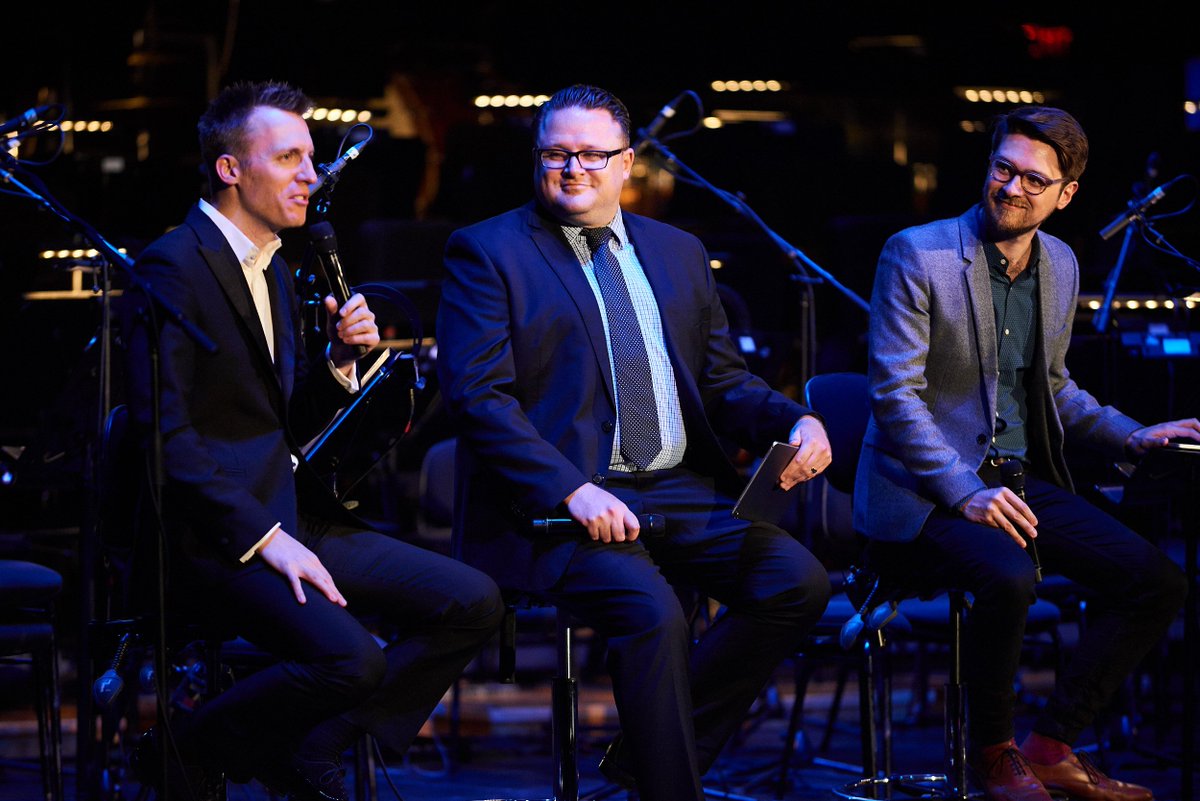
The show is hosted by Andrew Pogson, Dan Golding and Nicholas Buc, three aussies linked to the Melbourne Symphony Orchestra. Albeit the panel consists entirely of professional musicians, the discussions aren't hard to follow at all for the uneducated listeners. The trio keeps a light and enthusiastic tone, cracking a joke every now and then.


The show covered both the 1977 classic Star Wars


http://www.artofthescore.com.au/podcast/2017/5/24/episode-7-star-wars-part-1

http://www.artofthescore.com.au/podcast/2017/6/9/episode-8-star-wars-part-2

http://www.artofthescore.com.au/podcast/2017/7/4/episode-9-star-wars-part-3


as well as 2015's The Force Awakens.


http://www.artofthescore.com.au/podcast/2018/4/3/episode-15-the-force-awakens-part-1

http://www.artofthescore.com.au/podcast/2018/5/11/episode-16-the-force-awakens-part-2

But even if the quality of Art of the Score is pretty high, in my book the very best podcasts on Star Wars have been the episodes from the show


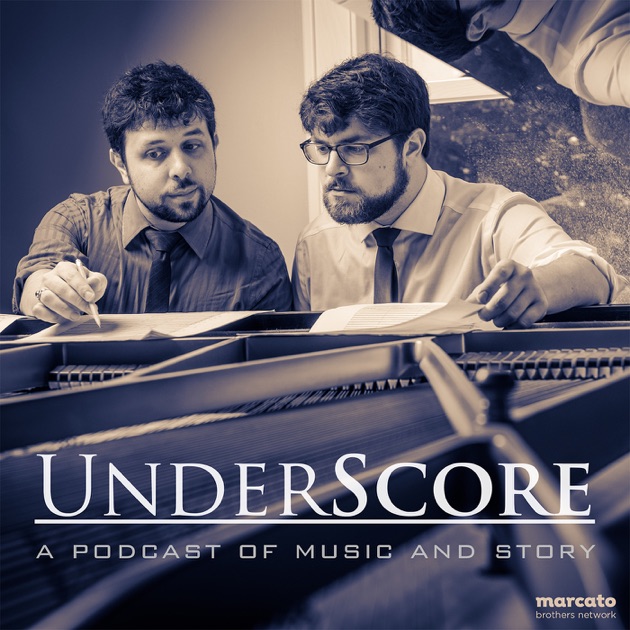
Underscore

hosted by the brothers Marty and William Brueggeman.

Image result for underscore podcast

Their podcast is extremely good, albeit on the nerdy side as the two musician-composer brothers really enjoy getting into the nitty-gritty of music theory with their in-depth analysis.

But they provide a lot of material, cueing in lots of bare piano examples to explain things like melody and harmony, lots of soundbites from interviews, or from the movies they analyze.
The other podcasts do that too, but here we are on another level.

They also covered the score to the original 1977 Star Wars in seven lengthy episodes, which I've already listened countless times. I'd place them up there with Howard Goodall's or Leonard Bernstein's TV programs on music.

http://underscorepodcast.blogspot.com/2018/06/prologue-long-time-ago.html

http://underscorepodcast.blogspot.com/2018/06/7m1-star-wars-main-title.html

http://underscorepodcast.blogspot.com/2018/07/7m2-themes-of-star-wars.html

http://underscorepodcast.blogspot.com/2018/07/7m3a-sw-spotting-session-part-i.html

http://underscorepodcast.blogspot.com/2018/07/interlude-princess-leias-theme.html

http://underscorepodcast.blogspot.com/2018/07/7m3b-spotting-session-for-star-wars.html

http://underscorepodcast.blogspot.com/2018/08/7m4-star-wars-commentary.html

Happy listening (and learning)!


Monday, 14 January 2019

The Impeccables

This is the laziest post I have ever come up with.
It's just a list. 
A list of artists.
Of comic artists.
They didn't necessarily create or illustrated my favourite comics, but all of the following did comics.

I wanted to create a list of great comic book artist (and to back me on the importance of lists I can summon none other than the great late Umberto Eco) 
Pure illustrators are not allowed in this lists.
They have to have done comics, and I'm not talking about a few, but an appreciable body of work in sequential art (either daily strips, comic books or graphic novels).

The following are not necessarily influential authors (though some of them are).

I wanted to include artists who:

  • are not merely "good", but rather the creators of pieces I love to behold (I'll admit that the list is largely based on taste).
  • are consistently good, or at least never sub-par.
  • I consider versatile (some excellently so, while other stay in their comfort zone) they can draw anything.
  • are solid draftspeople, with a very clear personal voice.


Some much beloved people are missing from my list, but this list is not a list about IMPORTANT artists.
This list is about DRAWING.

In my eyes these are the COMIC artists that you should look at if you want to see how to draw.
I do not consider this list definitive by any measure.
I will expand it and possibil leave someone out in the future.

But for my money, as of today, they are the best.

I call them "the Impeccables".

(here in strict alphabetical order)

Al Williamson
Albert Uderzo
Alberto Breccia
Alex Maleev
Alex Raymond
Alex Ross
Alex Toth
André Franquin
Antonio Barreti
Attilio Micheluzzi
Bill Sienkevich
Bill Watterson
Brian Bolland
Cam Kennedy
Corrado Mastrantuono
Dave McKean
David Mazzucchelli
Dino Battaglia
Eddy Campbell
Ferdnando Tacconi
Frank Cho
Gabriele Pennacchioli
Giorgio Cavazzano
Ivo Milazzo
J H Willliams III
Joe Kubert
John Buscema
Jon J Muth
Jorge Zaffino
Jose Luis Garcia-Lopez
Leonard Starr
Manfred Sommer
Massimo De Vita
Michael Lark
Mike Mignola
Milo Manara
Milton Caniff
Moebius (Jean Giraud)
Mort Drucker
Nicolas De Crecy
Noel Sickles
Paolo Euletieri-Serpieri
Serge Baeken
Sergio Toppi
Tobias Schalken
Walt Kelly
Winsor McCay

To follow, some honorable mentions, people I would have included but did not make it for "technical" (rather than merit) at this first round. I may decide to include them further.

Adam Hughes
Alfonso Font
Bill Wray
Bob De Moor
Bruce Timm
Edgar P. Jacobs
Gigi Cavenago
Jack Davis
Jordi Bernet
Riccardo Mannelli
Victor de la Fuente


To conclude, these are artists I've been suggested to include, but I nstill need to review properly (I know many of them, but not so much to consider them "impeccables")

Bernard Krigstein
Bernie Wrightson
Chris Samnee
Dan Speigle
Esteban Maroto
Goran Parlov
Guy Davis
Harvey Kurtzman
Hergé
Hugo Pratt
Jack Kirby
Jamie Hernandez
Jeff Smith
John Dixon
Johnny Craig
Mort Meskin
P. Craig Russell
Paul Gillon
Paul Grist
Pete Morisi
Rutu Modan
Steve Rude

I realize right now that this list does not include one single female artist, nor any cartoonist from Japan.

Friday, 11 January 2019

Serge (Part 2)

Thanks to Serge Baeken, who made these portraits last year.


As you can see, I can be an ugly sonuvabitch.

Contrarywise, my wife is still charming even when pulling faces.


Tuesday, 4 December 2018

Roberto


I do not remeber the specifics, I believe it had to do with my Jorge Zaffino Google Gallery, but a few years back I got acquainted over the internet with artist Roberto Zaghi.

Born and raised in Ferrara (and sporting a decisively recognizable accent from that region) and now lving in my own native Milan, Roberto begun his apprenticeship as a cartoonist by accident.

Quite literally: he was involved in a motobike crash which left him badly injured. While convalescent, Roberto rekindled his interest in comics, which he had abandoned since childhood in favor of studying electronics and chemistry.

Once he re-started drawing (something he previously only did for his own pleasure) he never stopped again.

He had some fine menthors in Germano Bonazzi and Nicola Mari, both affirmed pro's in Italy's comic scene.

Beside his obvious talent and passion, Roberto must have an incredible work ethic that make him commit to the drawing board many hours a day. To me that shows not only in the volume of his output, but also in his evolution.


If one compares his earlier art, clearly influenced by Nicola Mari, with his latest pages, sketches and commissions, the evolution is remarkable.

Proof that talent without commitment is useless as a bicycle with no handle.


Roberto is also high on my list of favourites because he likes all the right stuff. He has a soft spot for a lot of the old masters who produced solid, realistic work with flare and panache (Leonard Starr, José Luis Garcia-Lopez and most of all Alex Toth, who I started appreciating thanks to Roberto).

For someone who loves Jorge Zaffino, Roberto has a surprisingly polished, clean style (which I admire a lot).

He is also a very generous person, who will always find the time to reply to a mail or a phone call or engaging in an excange on Facebook.

He appears to be very modest as well: his only goal is to illustrate the story in the best way possible, with the reader in mind and very little ego.

To me, he is the quintessential gentleman professional of popular comics.

You can admire his work at the following links:

http://robertozaghi.blogspot.com/

https://www.instagram.com/robertozaghi/

http://robertozaghi.tumblr.com/

Tuesday, 13 November 2018

Stan Lee 1922-2018

On November 12, 2018, Stan Lee, born Stanley Martin Lieber, passed away.

He almost made it to the 100 years mark.


I had the chance to meet Stan Lee in Lucca, twenty-five years ago, long before the main italian comic con became the "sponsored chinese sideshow" of today (copyright: Maurizio Caschetto).

He was promoting the Marvel 2099 line of comics and he talked to a relatively small but enthusiastic audience about how Marvel Comics were more scientifically sound than DC's. 


He used to love Superman, for instance, because in the beginning he could leap across great distances thanks to his superior strength, and that was somewhat acceptable.

But then he just flew, with no reason whatsoever.
Whereas Thor does not fly. Thor rotates his hammer until it has enough momentum, then throws it and just exploits the pull of the hammer to fly ("Now, THAT's scientific!" he would joke).

Or he would tell about how puzzled he was when his assistant informed him that some "Mr. Felony" was there to meet him and about his surprise when he discovered it was none other than italian film director Federico Fellini.


I was but an 8th grader and listened in awe.


When asking (and getting) his autograph, my dear friend Alessandro Minoggi and I showed him the opening splash-page of a Spidey story we made, in our first attempt to create proper comics (on decent artist's board and using rapidographs). He smiled and nodded approvingly, which made us feel like a million dollar.

To the 13-years-old me, the avuncular Stan Lee seemed rather grandfatherly and I would not have thought back then that a quarter century later he would still be such a felt a presence in comicdom.

He leaves behind a great legacy, albeit a problematic one.


His passing, curiously not much later than Spider-Man co-creator Steve Ditko's, signifies the definitive end of an era, although it probably won't shift much the conversation among fans and historians about who should get what credit for the creation of the characters and stories that, still to this day, constitute the foundations of the so-called Marvel Universe.


Monday, 17 September 2018

More caricatures


I've been enjoying making caricatures lately, and making them quick (sort of).


Tim Burton: motivated by the news of the upcoming exhibit in Genk, i sketched this one on my sketchpad and left it half-finished until a couple of days ago, where I've blown it up a little bit and touched it up, adding the 'big f***ing Jackie-O glasses' (cit: Kevin Smith)


Quick warm up sketch. of my friend and mentor Serge Baeken.

Yet another "farewell present", this time for a colleague. The most caricature-y I've done so far. I'm ok with it, yet I think the original sketch got the likeness slightly better.


The incomparable Alan Moore, after Milt Kahl's Merlin form Disney's "The Sword in the Stone".


Monday, 10 September 2018

From life...


As a youngster I remember being frightened by any request to draw from life and I figure the feeling is shared among many of those who paint, draw or illustrate, even among professional. 


Drawing from life exposes the artist, more than the models.
Be it a portrait, or a full body pose, the work can be immediately compared to its real-life model by anyone passing by. Every onlooker can easily judge whether the likeness has been got.
The portrayed might react badly if the portrait is not accurate (or flattering) enough.


Drawing from life implicates that you are not alone. You won't be judged only by the result, but also by how long it will take you and by how you approach the task at hand.


But in time, drawing from life became one of my favourite occupations.


Being a staple of any traditional (and I dare say serious) art curriculum, schools, academies and other educational venues organise life sessions.
But since I left school I had little opportunities to have people pose for me (and I never dare asking, fearing I would sound cheeky).

So, when I found out that life sessions were regularly organised by Serge Baeken in Antwerp for people who cannot afford private sessions with models, I made sure to participate as often as I could (which is not nearly as much as I would like to).

Serge's sessions are great and particularly attuned to my sensibilities.
The posing times are short (5, 10, 15 minutes) which are great for people like me who mostly like to sketch and outline the drawing rather than work on rendering highlights and shadows.
Short posing times allow also to ask for more extreme poses, unsustainable for long stretches of time.

The illustration below were drawn during a different session with a different group, where poses are held for 30 minutes. The model chose of course more confortable positions.


But really, drawing from life can be done in any possible way. It is kind of addicting. So much so, that sometimes I draw from photographs with the same speed, urgency and approach.